
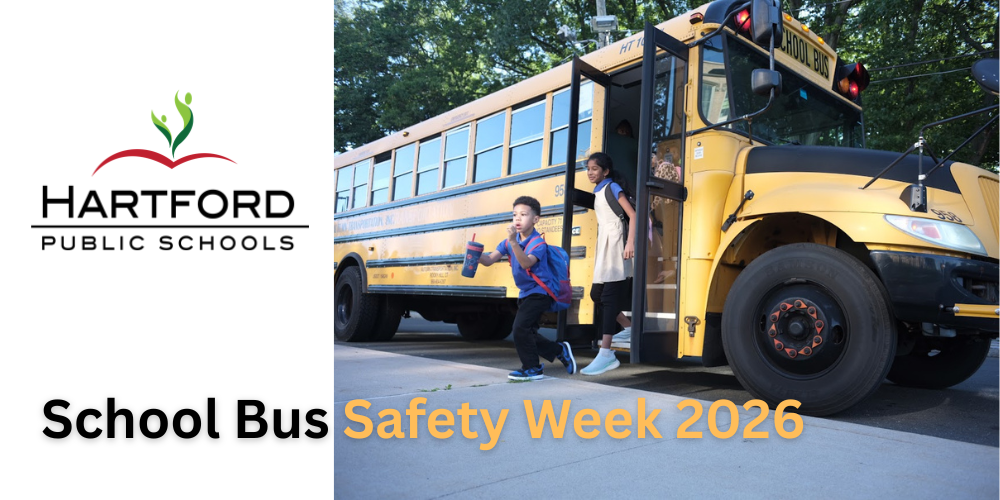
National School Bus Safety Week 2026 takes place from October 19–23, 2026, as designated by the National Association for Pupil Transportation (NAPT). This year’s theme is “Safe Rides, Everyday Heroes.” Spread the word and help us raise awareness about school bus safety rules, danger zones around buses, proper loading/unloading procedures, and the dangers of illegal school bus passing.
School buses are statistically the safest way to transport school children. Unfortunately, dangers still arise: From 2000-2024, there were 63 fatalities in crashes that involved a driver illegally passing a stopped school bus, an average of 2.5 fatalities a year. Almost half of those fatalities (27) were pedestrians who were 18 years old or younger.
Parents, remind your students about the Danger Zone: the 10-foot area all around the bus where the driver cannot see them. Teach them to arrive 5 minutes early, stay 10 feet back from the road, and always wait for the bus driver’s signal to cross. Learn more about School Bus Safety below.
SCHOOL BUS SAFETY
Join the U.S. Department of Transportation’s National Highway Traffic Safety Administration’s (NHTSA) safety initiative to educate the public about the importance of school bus safety. While the school bus is one of the safest modes of transportation, illegal school bus passing is a significant threat to children and their caretakers. NHTSA is sharing the following information about illegal school bus passing to help raise awareness about this very real danger.
About Illegal School Bus Passing
• In every state, it is illegal for vehicle drivers to pass a school bus while the school bus stop-arm is extended and the red lights are flashing. Failing to stop could result in injury or death to child pedestrians or their caretakers. Vehicle drivers must always come to a complete stop when a school bus stop-arm is extended and the red lights are flashing.
• Obey all traffic signs and signals. More injuries and fatalities occur outside of or near a school bus because a motorist has failed to obey the stop-arm warning or has failed to follow local traffic laws.
• Although school buses are statistically the safest way to transport school children, fatalities still happen. This is why it is critical that drivers follow all driving laws.
• A driver in a school-bus-related crash could be charged with one of the following:
o A violation for passing a stopped school bus
o A related factor of passing a school bus when prohibited by posted signs, pavement markings, or school bus displaying warning not to pass, and the crash was school-bus-related.
• The most dangerous part of the school bus ride is getting on and off the school bus.
• The school bus loading and unloading area is called the “Danger Zone.” Specifically, this is any side of the bus where a child may not be seen by the bus driver and, therefore, is in the most danger. These areas include:
o 10 feet in front of the bus, where the driver may be sitting too high to see a child
o 10 feet on either side of the bus, where a child may be in the driver’s blind spots
o Behind the school bus
• Young children are most likely to be struck because they:
o Hurry to get on and off the bus
o Act before they think and have little experience with traffic
o Assume motorists will see them and wait for them to cross the street
Safety Reminders for Parents and Caregivers
• Arrive at the bus stop five minutes early.
• Stand at least 5 giant steps (10 feet) away from the edge of the road.
• Wait until the bus stops, the door opens, and the driver says it’s okay before stepping onto the bus.
• Be careful that clothing with drawstrings and book bags with straps or dangling objects do not get caught in the handrail or door when exiting the bus.
• Walk in front of the bus; never walk behind the bus.
• Be sure the bus driver can always see you, and you can see the bus driver.
• Before crossing the street, stop and look left-right-left before crossing.
Safety Reminders for Motorists
• The overall best practice is to “always stop if there’s a school bus.”
• Yellow flashing lights indicate the bus is preparing to stop to load or unload children. Motorists should slow down and prepare to stop their vehicles.
• Motorists may begin moving only when the red flashing lights are turned off, the stop-arm is withdrawn, and the bus begins to move.
• Never pass on the right side of the bus, where children enter or exit. This is illegal and can have tragic results.
• The greatest risk to a child isn’t riding a school bus, but approaching or leaving one. That’s why, as a vehicle driver, it is especially important to pay attention. Students’ lives are on the line.
• Slow down. Watch for children walking in the street, especially if there are no sidewalks in the neighborhood. Watch for children playing and gathering near bus stops.
• Don’t drive distracted. Be alert. Children arriving for the bus may dart into the street without looking for traffic.
• Watch out for young people who may be distracted and not paying attention to the traffic around them.
For more information on illegal school bus passing, visit https://www.nhtsa.gov/school-bus-safety/reducing-illegal-passing-school-buses.